

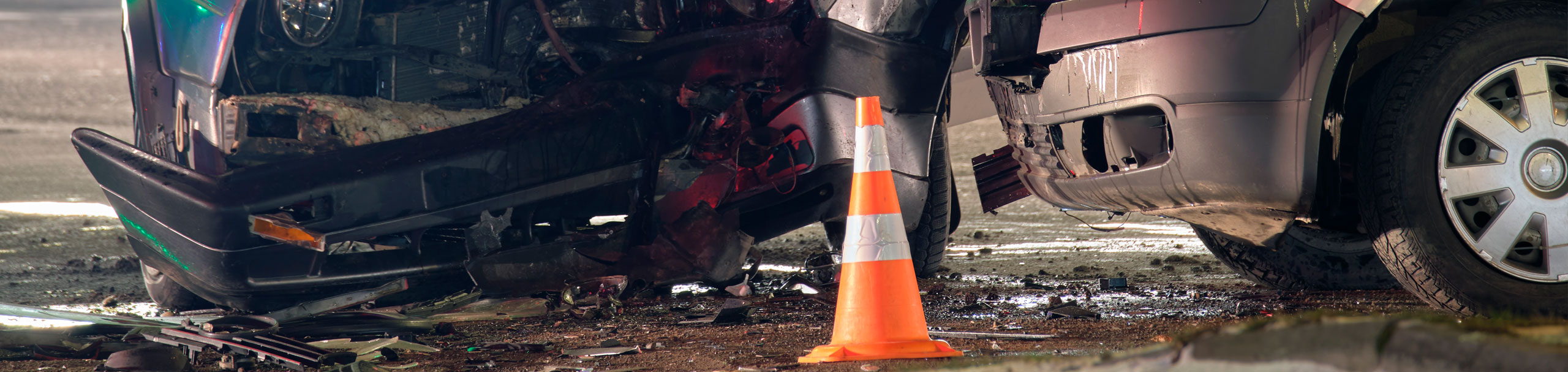
Lawyers specialising in total car accidents
Why trust our solicitors in the event of a total loss of your car?
Has your insurer declared your vehicle a total loss and are you dissatisfied with the compensation they are offering you, considering it insufficient?
In many cases, the declaration of total loss is not incorrect in itself, but the economic valuation of the vehicle is. Companies often apply restrictive criteria that reduce the compensation to be received by the injured party.
As solicitors specialising in traffic accidents and civil liability, we defend owners and victims against insurers when a vehicle is declared a total loss.
What does it mean for a car to be declared a total loss?
A vehicle is considered a total loss when the cost of repair exceeds the economic value that the insurer attributes to the car before the traffic accident.
However, this seemingly simple definition hides a key question:
What value should be taken as a reference for compensation?
Insurance companies often use the so-called market value, i.e. the market value of the vehicle just before the accident, taking into account age and depreciation.
The problem is that this value does not always allow the owner to purchase a similar vehicle under equivalent conditions.
Is it mandatory to accept the declaration of total loss?
The insurance company may propose a total loss claim, but the injured party has the right to:
- Discuss the financial assessment.
- Request an independent expert opinion.
- Claim the actual market value.
- Negotiate an improvement in the compensation based on the market value.
- Challenge the offer in court if it is insufficient.
Each case must be analysed individually, especially when the difference between the cost of repair and the compensation is not disproportionate.
What can you claim in compensation after a total loss?
When your car is declared a total loss, you can claim more than just the value of the vehicle.
The compensation may also include:
- Tow truck and transport costs.
- Storage costs.
- Transfer costs for the new vehicle.
- Loss of use.
- Damaged personal belongings.
- Special adaptations if the vehicle was modified.
- Loss of earnings if it was a work vehicle.
Many insurance companies omit these items from their offers or reduce them unjustifiably.
Can the insurance company force me to hand over the car?
Not always.
- If you accept the compensation without keeping the wreck, the vehicle becomes the property of the insurance company.
- If you decide to keep it, the correctly assessed value of the wreck will be deducted. However, this assessment may be disputed.
When is it worth claiming for a total loss?
We recommend reviewing the case when:
- The financial offer is lower than the actual market value.
- The vehicle was particularly well maintained or had upgrades.
- The repair cost does not significantly exceed the value of the car.
- The insurance automatically applies the minimum market value.
- Debatable deductions have been made.
In many cases, a proper claim by lawyers specialising in accidents can significantly increase the compensation initially offered.
How we act from Onandia in cases of total loss
Each case is analysed with the utmost technical and legal rigour to ensure that you receive every penny you are entitled to:
- Free review of the insurer’s offer.
- Analysis of the vehicle’s actual market value.
- Review of the expert appraisal and calculation of the value of the wreckage.
- Well-founded out-of-court claim.
- Direct negotiation.
- Legal action if the offer is insufficient.

We call you

Have you been
in an accident?

Claim
for your
accident for
FREE

Fast 24-hour response
Frequently asked questions

We recommend that you:
Before accepting any type of accident compensation offered by insurance companies or the other party:
1. Do not sign any documents.
2. Consult with your solicitor, as the amount is very likely to be less than what you could receive.

